Elements such as camera shots/angles, mise-en-scene, editing techniques, and sounds are used throughout the film to create the wanted effects on the audience. These elements help establish the setting and the common themes used throughout the movie in order to advance the plot.
The clip begins with a sad melody playing in the background of the beginning credits as well as a voice-over of two characters discussing a what can be assumed is a 'crash landing.' This sets a very depressing mood for the beginning of the film, as both the discussion and the non-diegetic sound create a sense of tragedy and possible defeat. The film then cuts to an eye level shot of one of the characters, by using this angle the audience is able to see that there is some obvious turbulence you can also see the distress on Captain America's face. Then it cuts to an eye level shot of agent Carter, this angle allows the audience to see the emotions on her face, she seems not only visibly upset but also defeated, this lets us infer that she has accepted the possible outcome of the situation. By using these kinds of shots the film makers lead the viewer to emphasize with the character's situation. This 'flashback' scene also includes some action shots of the aircraft going down as well as a close up of Agent Carter's face which depicts her crying after realizing that the plane crashed and that Captain America most likely died on impact. By using this angle in this instance the audience is able to create an emotional connection to the main character due to the nature of the scene, this allowed to viewer to to not only be sympathetic towards her but also create likability towards Agent Carter. The camera then cuts to a long shot, the distance puts into perspective the size of the room compared to how much space she takes up, she off the side of the room with her face in her hands. The setting she's in seems to overwhelm her stature, by using this angle the film makers create a lonely and depressing atmosphere which the audience is able to detect.
After this scene, the clip cuts to an establishing shot of New York City with a caption at the bottom which reveals the current story will take place one year late. This reveals that the previous scene was a flashback used to give the audience background for the new story. The next scene uses the sound of a loud alarm blaring to give the audience a sense of urgency, by doing so the film makers gives the following scene importance. This importance is justified when we see the characters in the film rush to look organized and get ready to listen to any instructions that follow. The background music used during the phone call also created a sense of urgency. All these elements came together to develop the plot and reveal to the audience what one of the main issues the main character will be dealing with throughout the story, which is 'The Zodiac'. The exchange that follows between the main character, Agent Carter, and the Chief Commander at her job reveals another issue she will be facing which is sexism in the workplace. By having the Chief stand over her initially and put his hand on her shoulder condescendingly the film makers establish the power and authority he holds over Agent Carter, by doing this and making her seem smaller physically the scene symbolizes the little respect and position she seems to hold socially among her coworkers. In the following scene the film makers use low key lighting to create a sense of mystery and perhaps unpredictability. This mood is supported when the phone in the Chief's office suddenly starts blaring, this creates a sense of urgency and confusion, it makes the audience question who is calling and what is about to take place next. The red flashing light being reflected onto Agent Carter's face symbolizes adventure and possible danger, this keeps the viewer at the edge of their seat. The close up shot of Carter's face that follows allows us to see the determination on her face, we can see that she is committed to proving her boss and coworkers wrong as well as showing them what she is truly capable of. The close up of the paper gives the audience significant information which is the location of 'the Zodiac'.
In the following scene of Agent Carter walking up an isolated and dark parking lot the audience is really able to take in the costume and setting of the era trying to be recreated, the fashion is very obviously from the 50's and/or 60's and this can be inferred not only by the wardrobe both Carter and the men are wearing but also by the styles of cars on that street as well as the diegetic music playing on the radio in the background. The dim lighting used in this scene suggest the suspicious nature of the events that might've been taking place at this location. The next action shots portray the force and extent of the fight, the film makers use this to show the audience Carter's true capabilities. The bird's eye shot of the man crashing through the window helped establish the force of Carter's kick and showed her true strength. The over the shoulder and follow shots that follow allows the viewer to see what the man sees, which is nothing, at this point it seems like Carter has vanished. These shots coupled with the non diegetic chilling music creates suspense and engages the audience by making them wonder where she could've gone and what might happen next. Of course,those questions are answered when Agent Carter suddenly appears behind the man and aims a gun at him.
Monday, December 9, 2019

Sunday, December 8, 2019


Thursday, November 21, 2019

Wednesday, November 20, 2019
Sunday, November 17, 2019




Thursday, November 14, 2019
Mise-en-Scene in The Handmaid's Tale
The Handmaid's Tale:
I decided to comment on the mise-en-scene of episode 13 in season 3 of The Handmaid's tale. This is mainly due to the fact that I am currently watching this show but also because I've found that the cinematography used to progress the story and instill specific emotions within the viewers particularly astonishing. The way mise-en-scene was used in this show is extremely effective which makes it the obvious choice when commenting on these specific attributes.
Setting: After the recap of the previous episode, the episode starts out with a dark screen and an alarm blaring. Lights begin to flash every so often making the setting a little more distinguishable each time. We can see the main character's face briefly every couple of seconds. She appears to be tired and disheveled and wears a weary look on her face, we can hear dogs aggressively barking in the background. By opening up the scene in a barely recognizable setting, the filmmakers mainly use sound to trigger a sense of confusion, tension, and panic within the viewer. After a minute, bright lights turn on revealing her location. It is shot from behind her with the source of light being in front of her, this creates a silhouette in which we can see the main character and several other women; finally realizing that she is not alone. In that shot we can also make out dirty transparent curtains in front of them which we would normally see at a butcher's shop or some scary hospital. This eerie setting sets the atmosphere for the rest of the scene and leaves the viewer with suspense.
Lighting: As the opening scene progresses the film makers use low-key lighting in order to keep the suspense drawn out. They keep the light at a low level to cast large shadows and create a dark atmosphere in order to highlight the feel of the situation. The darkness coupled with the cries of fear let out by the women harshly being ushered away is enough to make the audience shudder in horror, this being the sought after reaction by the film makers. Soon we realize that this scene is in fact a flashback of when the main character (June) was first captured and separated from her daughter. By now the audience is aware of the dark beginnings that took place in other to birth the new nation so using low key lighting works as both a symbol and an effective method in reminding us of the horrors June had to endure. After that scene the episode then cuts to June in the present in which they shift into using high-key lighting in order to contrast her life then and now, one symbolized despair while the other symbolized renewal and hope. By making the following scene have a happier atmosphere and softer lighting it almost creates a sense of irony, this being because of the darkness of her reality and the metaphor for darkness being used throughout the episode despite the high key lighting.
Costume: In
this overall TV series costumes play a very important role into understanding
the kind of society they live in. The women are dressed very conservatively,
the show little to no skin and depending on the social status of the women the
wardrobe differs slightly. The handmaids (often considered one of the lower
classes) are responsible for bearing children for the barren wives in the
families they've been assigned. Because of this as well as the beliefs held by
the community they wear more 'ancient' or 'colonial' clothes if you will, their
costumes consist of a simple long loose red dress (signifies fertility,
passion, and courage) that reaches their
ankles with long sleeves paired with a type of white bonnet and high brown
boots. The wives are among the higher class within the women in the community,
their costumes are slightly more modern and futuristic while still using
tradition fashion values; their wardrobe consists of long loose teal dresses
(signifies subservience and sadness) with varying designs that stop just before
the ankle along with sleeves that stop at their elbows, they also wear high
heels of the same color. The commanders, which are the most influential highest
ranking officials are dressed different in the sense that they wear regular 'suits' which aren't
old in any way, this also symbolizes the way men are prioritized in this
society within the TV show. The costumes in this series are used to showcase
social status within the community but they also each symbolize something in
the show depending on the colors and styles.
Staging/Acting: As always all the actors in this show continued to play their characters extremely well. They all delivered their lines in a way in which was believable and in some performances portrayed such raw emotion you couldn't help but feel exactly what they did. Elisabeth Moss specifically, the actress who plays June, really sells her character through her expressions. She truly is an amazing actress and plays her part extremely well; this is especially evident in the scene where her 'commander' tells her the escape mission is off. The way she spoke and described the situation and how she felt about it was absolutely incredible, you could see the fear and anger in her eyes. You could hear the devastation in her voice. Clearly the style of performance which Moss perfected was method or naturalistic acting, she truly became one with her character. Judging by her outstanding performance it is obvious that she had to have adopted June's personality, thoughts, background and experiences in order to deliver such a convincing performance. During this scene blocking was also used in order to establish superiority, this was done when the commander walked in. He is seen standing over June while she sits in a manner in which he seems bigger than her making her small and unimportant in the matter. But as the scene continues, June starts to gain more confidence, towards the end of their conversation June finally turns the tables and asserts dominance by standing up and grabbing her gun all while menacingly explaining to the commander he doesn't get to call the shots anymore. This is an attempt at intimidating him into submitting to her, by having her stand up and overshadow him the blocking is switched and the film makers are successful at shifting the power from the commander to June in the audience's eyes.
Tuesday, October 15, 2019
Master Edits with Sound
Contrast
Film Music: for our contrast video edit we decided to add in a form of non-diegetic sound that would highlight the difference in the personalities being portrayed, by adding an active, upbeat tune such as the one heard in the ride we were able to achieve this. We added the music to every clip in which Madison was being 'hyperactive' to convey the contrast between herself and me when I was sleeping. In the last clip we mashed both sounds together so that the viewer could see how drastically different the personalities are side by side.Postsynchronization Dubbing: we also decided to add sound which was not in the original take, we added the sound of crickets, which is traditionally used to signify silence, to really give the effect of my laziness. In comparison with music from Madison's clips, the viewer now sees the opposite. This is because both sounds give off different vibes, one is happy and upbeat while the other is boring and lazy.
Parallelism
Offscreen Sound: during this clip we decided to add offscreen noises as a form of diegetic sound, we added a bell ringing during the beginning and then the chattering of students that were assumed to be in the courtyard. These sounds were added as a way to set the scene and give the viewer a sense of where the subjects were. Because the scene takes place at a school and we can hear the faint noise of students talking the sound we added allows the viewer too recall similar situations they might've witnessed at their school. These sounds paired with the video can bring about nostalgia or annoyance within the audience.
Symbolism
Nonsimultaineous Sound: we added this type of sound to this clip in order to signify that the Trojan head stood for something that the viewer hadn't necessarily seen yet. Trojans are often associated with wars or fighting so by adding the sound of a battle cry that might've taken place earlier allowed the audience to make a connecting between the symbol we were using and previous events we were alluding to.
Film Music: in the second part of our video we decide to also add a sort of heroic song which happened to be the theme song from "Game of Thrones." This coupled with the battle cry in the previous clip made it clear to the reader that there had been a victory.By using both of these sounds after the other coupled with the symbol of the Trojan head and the meaning the statue help we were able to make the audience make connections and infer exactly what we wanted them to.
Simultaneity
Postsynchronization Dubbing: since the airplane shown in this clip is obviously not real we had to add a realistic sound effect after filming to acquire the desired result. By adding this sound we were able to create an 'in the moment' effect and it made you feel as if you were there also hearing it fly over your head. By allowing the sound to continue throughout both of the clips the viewer was able to gain the understanding that both events (although in separate locations) occurred during the same time. The sound makes the relation between the two clips more clear, we are able to understand that the subject in the second part is actually waving up at the plane passing overhead.
Leitmotif
Voice Over: we added this sound in order to make the reiteration of a theme more clear in our video, from the beginning you can tell that the subject (me) is angry due to my expressions and actions. But by adding a voice over and revealing to the viewer what I was thinking, the audience gets a more clear understanding of what is going on and what the situation is. We use the same technique when we first show Madison reading a pamphlet. By being able to hear her thoughts we were able to show that she was innocently minding her business and that she in no way warranted the violent actions taken by me. Every time I stomp over or the audience hears my thoughts they know that I will probably lash out.
Sound Bridge: in order to make the video less serious we used John Cena's catchphrase in order to both allude to the similarity between my violence and the fighting from WWE but also develop the reiteration of a theme. Whenever this sound was played you knew I was about to hit someone. By using this sound in the form of a sound bridge going over some clips we were able to connect the chaotic mood we were trying to convey and tie both clips together through their similarities.
Thursday, September 26, 2019
How Different Films Have Used the 5 Master Edits
Contrast: Forrest Gump
In the beginning of this film we are shown the main character, Forrest, talking with a lady on a bench. Towards the end of their conversation Forrest starts making a scrunched up face to signify he's thinking really hard about something. As he's talking about his past and his childhood the camera cuts to him when he was younger making the same scrunched up face from before. Only this time he is grimacing because he is at the doctor's office, not because he is having a flashback. This scene specifically uses contrast editing because it is highlighting the difference between young Forrest and present Forrest, they are both making the same face but the movie makes sure to point out that the reasons for their grimace are different and that it is at different points in time.
Parallelism: Pocahontas
In this film we eventually reach the climax of the movie where the Native Americans are going to execute John Smith. In this specific scene, the tribe is getting ready for the execution while the colonists are getting ready to go head to head with the tribe and rescue John. The film makers make sure to show the viewer how this two groups are similar although throughout the movie you might think they are nothing alike. They do this by showing them essentially doing the same things in different locations while highlighting parallel features. In one cut the natives lift up their spears and then it cuts to the colonists lifting up their bayonets. Then it shows the tribe dancing by a fire while the colonists lift up their torches also lit up by fire. The filmmakers also include a close up of both groups. By using all of these separate videos and editing them together they were able to show how similar these groups actually are and how they are all getting ready to go to the same place. In this way they were able to use parallelism.
Symbolism: Moana
During this movie, there was a scene between the main character, Moana, and her grandmother in which they both are dancing on the beach and manta rays swim up to them in the ocean. When this happens, the grandmother tells Moana that when she passes away she'll come back as a manta ray. As she says this, she also points out that that's the reason she got a manta ray done as her tattoo. From here on out the filmmakers use manta rays to symbolize the grandma and her spirit that lives on in the ocean. In this particular scene, Moana is talking with her grandma as she lays in her deathbed. Moana then leaves her grandma (at her request) to pursue her journey and save the island, as she's drifting away from the shore a giant glowing manta ray is seen swimming past her and then jump up and out of the water, because of the symbolism established earlier in the movie the viewer knows that Moana's grandma has passed on and that she is the manta ray that just swam by her.
Simultaneity: Stranger Things
During this episode of the show we finally find out what happened to Barbs, the girl that went missing shortly after Will did, and during this scene this specific style of editing was used to build up suspense. Up until that point we hadn't had seen Barbs or knew where she was, although there were hints. This scene would finally establish whether Barbs would escape the upside down or if she would perish. During this particular scene Barbs wakes up in Nancy's pool but in an alternate dimension called the 'Upside Down.' She quickly realizes she's not alone and that she was in danger, they then show her being chased by this thing. Then they cut to Nancy and her boyfriend in her room in the real world, this showcases that while all three are technically in the same location very different things are occurring at the same time. They continue to cut back and forth between them to make the viewer wonder what is going to occur and to keep everyone on their toes. Showing these things happening simultaneously built up anticipation for the audience.
Leitmotif: Easy A
During this film the main character Olive, talks about how all she's
ever dreamed of is having a relationship like the ones in cheesy 80's romance
films. She mentions how she wants guys to romance her traditionally rather than
take her out to some fast food joint and then ask her inappropriate things. At
the end of the movie (in this particular scene), her love interest finds out
what she's really been looking for all this time and shows up to her house and
plays music on a speaker outside her window. Olive hears him and goes
downstairs to be reunited with him. The two make up and look past their
differences and ride off on a lawnmower. This scene uses the Leitmotif editing
style because it is alluding to two past films released in the 80's. When her
love interest plays music outside Olive's window the filmmakers are referencing
the drama "Say Anything" and when they both ride off on a lawn mower
at the very end of the movie the filmmakers are also referencing a coming of
age movie known as "Can't Buy Me Love." By subtly referencing these
two movies during the film, they producers are using allusion to create a
Leitmotif edit which allows the audience to make a connection.
Sunday, September 22, 2019
5 Master Edits
Our Five Master Edits
The first editing style my partner and I used was a 'Contrast' edit, this is done by cutting between two different scenarios to highlight their differences. This edit took us five different shots to be able to recreate it. My partner (Madison) and I decided to film two drastically different personalities in order to really captivate the essence of this editing style. In our video, the viewer can clearly see one person being lazy and acting tired while the other is hyper and extremely active. This is shown by Madison running and jumping around while I lay down and keep trying to go to sleep.
The second editing style my partner and I used was 'Parallelism,' this is done by connecting two different scenes by focusing on parallel features. This edit took us four different shots to be able to recreate it. We decided to film trash on a lunch table from one side and then Madison walking up to the table from another side. We made sure to film each shot from opposite sides in order to show parallelism in this type of edit.
The third editing style we used was 'Symbolism,' this type of edit is achieved by cutting from the main scene to another which allows the audience to create a symbolic connection. This edit only took us two shots to be able to recreate it. Our scene starts out in the middle of the courtyard, the camera is focused on the Trojan logo plastered on the balcony of one of the buildings, we then pan to the ground where a Trojan head can be seen on the ground. The camera zooms in on the ground until all you can see is black and then it zooms back out only to showcase a Trojan Statue found at the front of the school. This allows the audience to create a connection between the initial logo and then the final shot of the statue, this illustrates school pride as well as our mascot.
The fourth editing style Madison and I used was 'Simultaneity,' this edit is done by cutting between two events going on at the same time, this type of edit is usually used to create suspense. This edit also only took two shots to remake. We decided to take a video of an "airplane" flying in the sky and then cut to me waving from the ground up at it in order to achieve this style of edit. By doing so, we are able to convey to the audience that while the plane is flying above, someone is watching from below.
The fifth and final editing style we used was 'Leitmotif,' this style of editing is done by repeating a shot at key moments in order to create a sort of code. This edit took us 6 shots in order to be able to recreate it. The video started by showing me get angry and aggressive, it then cut to Zoe waving at me and then it cut back to me stomping my feet in anger in order to signify something bad might happen. I then walked over to Zoe and shoved her, then the camera showcases Madison reading a pamphlet. The camera then cuts back to me stomping over angrily in order to serve as a cue that I might become aggressive again. In the next shot, I can be seen walking over to Madison and also shoving her away. By repeatedly cutting back to me being angry, we were able to create a visual code which would signify to the viewer that someone would get hurt any time the camera panned back to me.
The second editing style my partner and I used was 'Parallelism,' this is done by connecting two different scenes by focusing on parallel features. This edit took us four different shots to be able to recreate it. We decided to film trash on a lunch table from one side and then Madison walking up to the table from another side. We made sure to film each shot from opposite sides in order to show parallelism in this type of edit.
The third editing style we used was 'Symbolism,' this type of edit is achieved by cutting from the main scene to another which allows the audience to create a symbolic connection. This edit only took us two shots to be able to recreate it. Our scene starts out in the middle of the courtyard, the camera is focused on the Trojan logo plastered on the balcony of one of the buildings, we then pan to the ground where a Trojan head can be seen on the ground. The camera zooms in on the ground until all you can see is black and then it zooms back out only to showcase a Trojan Statue found at the front of the school. This allows the audience to create a connection between the initial logo and then the final shot of the statue, this illustrates school pride as well as our mascot.
The fourth editing style Madison and I used was 'Simultaneity,' this edit is done by cutting between two events going on at the same time, this type of edit is usually used to create suspense. This edit also only took two shots to remake. We decided to take a video of an "airplane" flying in the sky and then cut to me waving from the ground up at it in order to achieve this style of edit. By doing so, we are able to convey to the audience that while the plane is flying above, someone is watching from below.
The fifth and final editing style we used was 'Leitmotif,' this style of editing is done by repeating a shot at key moments in order to create a sort of code. This edit took us 6 shots in order to be able to recreate it. The video started by showing me get angry and aggressive, it then cut to Zoe waving at me and then it cut back to me stomping my feet in anger in order to signify something bad might happen. I then walked over to Zoe and shoved her, then the camera showcases Madison reading a pamphlet. The camera then cuts back to me stomping over angrily in order to serve as a cue that I might become aggressive again. In the next shot, I can be seen walking over to Madison and also shoving her away. By repeatedly cutting back to me being angry, we were able to create a visual code which would signify to the viewer that someone would get hurt any time the camera panned back to me.
Sunday, September 8, 2019
How Films Use Different Shots to Evoke Specific Emotions
I chose to comment on a couple of
the camera shots used in the Korean Drama that I’m currently watching, this
show is called “Oh My Ghost.” I chose to comment on this show specifically
because Asian Dramas are known for using a variety of different intensified
camera angles to create a sense of shock and sentimentality within their
viewers. This particular K-Drama fits into the romance genre as it focuses on a
shy kitchen assistant (Bong-sun) who gets possessed by the ghost of a confident
young woman (Soon-ae) who needs to resolve her unfinished business in order for
her to pass on to the afterlife. In order for the ghost to pass on she must
find a boyfriend. This show has a lot of different twists and unexpected
outcomes, because of this, the film makers had to use different camera shots to
evoke the right feelings in their audience.

The episode opens up with an establishing shot of the restaurant owned by Soon-ae’s father, the
shot shows the surroundings, and sets up the overall mood of the following
scene. It is sunny outside and it seems like there’s a breeze, this is a very
cheery and happy environment. Just as it was mentioned in the article, ‘Use of
Long Shot in Films’, the establishing shot illustrates a large location which
in this case seems to be their neighborhood and judging by all the cars parked
outside their business, they probably have a lot of customers.
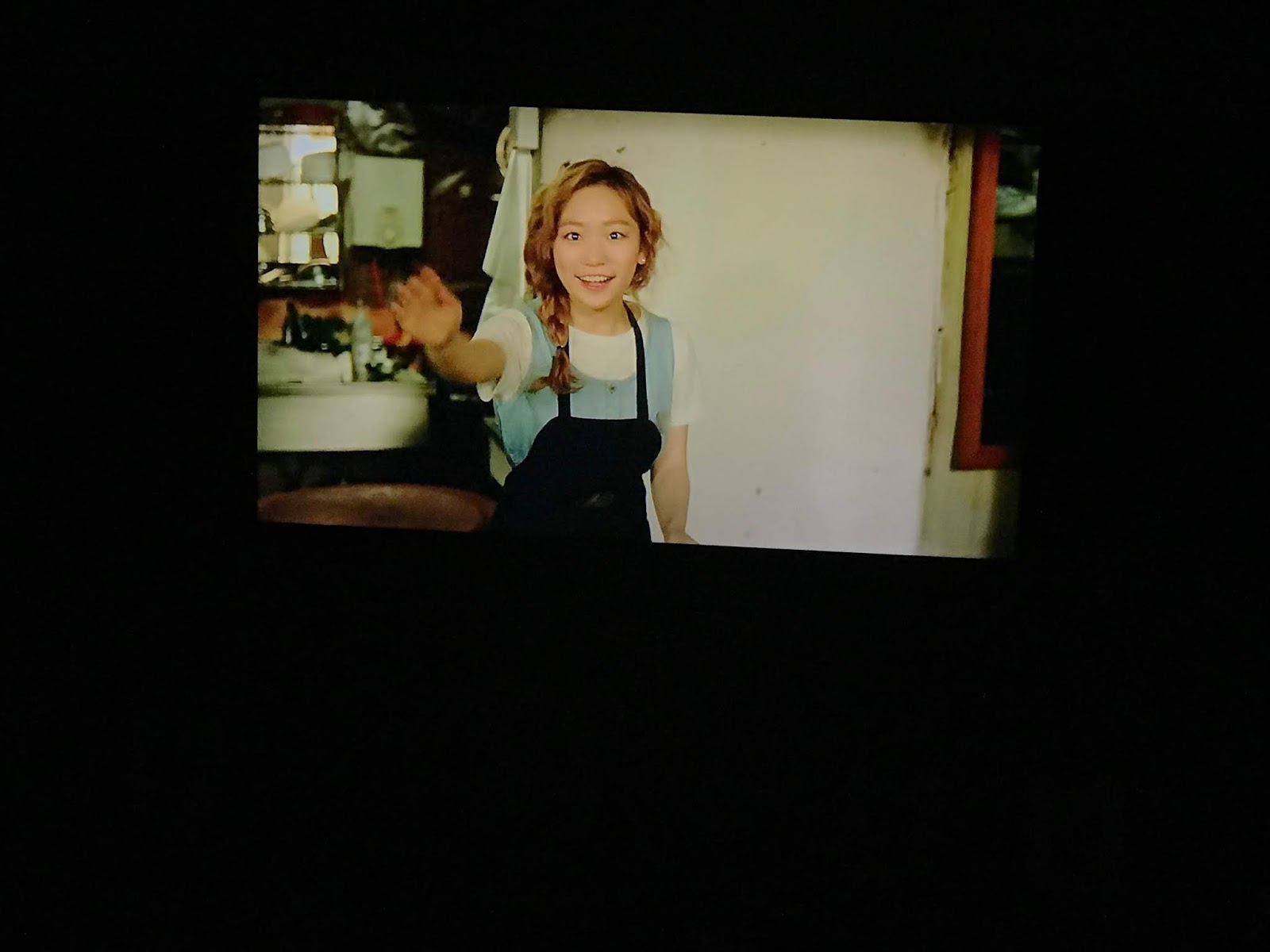
The next scene shows Soon-ae greeting the customers in what
seems to be a close shot, this can
be distinguished because we can see her from the top of her head to her
mid-waist. We are close enough to see her friendly demeanor and warm smile,
this indicates that the mood of the restaurant is uplifting and that she
genuinely enjoys working there. Right away, the audience can tell that this is
a flashback because earlier in the show it was revealed that Soon-ae had actually
passed away. Although this shot makes the atmosphere feel happy, the viewer can’t
help but feel a bit pitiful by getting a glance at her past now knowing that
she is a ghost.

Following
the flashback, we go back to the present and we see Bong-sun in an eye level shot. Since Soon-ae has
possessed Bong-sun she was the one currently recalling the memories of her life
when she was still alive, what triggered the rush of old memories was the fact
that Bong-sun had run in to Soon-ae’s father at a police station. Because of
the shot being used, the audience can focus on the character and we can see her
getting emotional due to the nature of her situation. The article ‘Different
Camera Angles Create Different Emotions’ mentions that since the camera is
zoomed in on the subject’s face and shoulders, we should be able to feel
whatever the character is feeling. The film makers were successful in
recreating this shot because we can see the tears welling up in Bong-sun’s eyes
as well as her sorrowful expression, this is effective in making the viewer
also feel sad.

As the episode progresses, Bong-sun (who is possessed by Soon-ae)
starts becoming closer to Soon-ae’s father. While they’re conversing at his
restaurant there are several over the
shoulder shots being showcased. We can tell that these are OTS shots
because although they are in Bong-sun’s point of view part of the back of her
head is still visible. The article ‘Different Camera Angles Create Different
Emotions’ explains that these types of shots are supposed to make the viewer
feel as if they are also experiencing the scene and that they should help
illustrate how close the characters are. The film makers were able to recreate
those feelings exactly, because of the angle, the audience can tell how
comfortable the two characters are with each other. It also makes it seem like
as if we were a third party observing their conversation.

The next notable shot in the episode is the two shot; this particular one was
showcasing Bong-sun trying to convince her boss, Sun-woo, not to fire the sous
chef at the restaurant they work at. This type of shot is usually used to film
a conversation. The article ‘Different Camera Angles Create Different Emotions’
talks about how these shots add a level of intimacy between two characters,
considering that Sun-woo is the main love interest of Bong-sun it would make
sense that the film makers decided to use this particular shot for their
conversation. We are able to see Bong-sun smiling at her boss and earlier in
the scene even touching his arm in order to appear friendlier. This creates a
sense of anticipation in the audience because we can see them beginning to get
closer to each other and begin to like one another.
Friday, September 6, 2019
Angles and Emotions
I chose to comment on Zoe's and Woody's camera shots.
I
commented the following on Zoe's blog:
1. Your reaction
shot was cute. Your dog looked interested in what was going on off camera,
it made me wonder what she was looking at. She looked confused but you did a
good job conveying your intended emotion in the audience/viewer.
2. Your low
angle shot was well conducted. Being so close to the ground made me feel as
if I was smaller than the dog, almost as if I was toy on the ground or another
animal/insect watching while remaining unnoticed itself.
3. Your close
up shot was very relaxing to watch. It made me feel calm and at ease,
almost as if I was at the beach myself. You did very well at executing it!
Because of how close it was, I was able to notice small details in the sand and
waves.
4. Your follow
shot was interesting. This is in the sense that I felt like I was watching
a vlog or following someone around while they went about their day. You were
successful at making the viewer wonder where the subject was going, especially
since we can’t see the whole scene.
I
commented the following on Woody's blog:
1. Your dolly
shot was decent. It was definitely a bit shaky but that might’ve been
because it was your first time using a stabilizer. Even so, it created a sense
of curiosity; this being finding out what was at the end of the hall.
2. Your choker
shot was funny. I’m not sure if that was the emotion you were trying to
evoke from the viewer but being that close allowed me to see just how
uncomfortable your subject truly was, which was hilarious. You did a good job
at executing the shot.
3. Your pan
shot was beautiful. Something about the scenery was breathtaking,
especially taken in the early morning, the video made it seem so peaceful which
brought upon a sense of tranquility.
4. Your point
of view shot was good. It truly made me feel as if I was watching the scene
with your eyes, also your focus on the instrument in front of you gave the
object some unknown significance. It made me feel as if it was important, even
though I know it’s just a basic shot and that might not have been your intention.
These different types of shots evoked a plethora of
feelings and emotions from the viewer, in the article we read it explained how
low angle shots are supposed to make you feel like the subject is larger than
it is. Zoe was successful in recreating this feeling because her low angle shot
made the viewer feel like we were on the ground looking up, the focus on the
subject (her dog) made it seem important. The article also mentions point of
view shots, it says that these type of shots should make it feel like you've
been place in a person's head and are looking through their eyes. Woody was
also successful in recreating this feeling, panning the camera downwards and
opening the case with his hand made it seem like he was looking down and that
was what he saw. By using different angles when filming we are able to convey
different types of emotions in our audience, this is because angles can set the
attitude of the shot and this paired with the subject or topic at hand will
make the mood clear to the viewer.
Subscribe to:
Posts (Atom)
-
Actors: There will be three primary actors. Madison Craumer, Zoe Orgass, and myself (Astrid Nova). Madison and I will be playing detectives ...
-
 We started filming with the green screen this week, it was a little confusing but with the help of our teacher and perseverance we started t...